Australian Education Research Organisation (AERO)

Main navigation

  • Research and resources

    Research and resources

    • Resource collections
      • Resource collections
    • Guides & resources
      • Practice guides
      • Practice resources
      • Videos
      • Courses
      • Ochre resources
    • Summaries & explainers
      • Research summaries
      • Explainers
    • Research
      • Research reports
      • Analytical Insights papers
      • Discussion papers
      • Technical reports
      • Projects
  • Topics

    Topics

    • Practice approaches
      • Assessment & measurement
      • Classroom management
      • Evidence-based practices
      • Explicit instruction
      • Formative assessment
      • Mastery learning
      • Practice implementation
      • Spacing & retrieval
      • Tiered interventions
    • Child & student cohorts
      • Culturally and linguistically diverse (CALD)
      • Disability & inclusion
      • Diversity
      • Equity
      • First Nations
    • Engagement strategies
      • Family engagement
      • Student engagement
      • Transitions
    • Learning & learning outcomes
      • Cognitive science
      • Executive functions
      • Language & communication
      • Literacy
      • Numeracy
      • STEM
      • Technology
      • Wellbeing & belonging
    • System-wide considerations
      • Evidence - use & generation
      • Initial teacher education
      • Leadership, administration & governance
      • NAPLAN
      • Policy
      • Professional learning
      • Workforce
  • Education settings

    Education settings

    • Education settings
      • Early childhood education and care (ECEC)
      • Primary school
      • Secondary school
      • Senior secondary school
      • Outside school hours care (OSHC)
  • About us

    About us

    • About AERO
      • About us
      • Our team
      • Our advisory groups
      • First Nations at AERO
      • Agency publications
      • Submissions
      • News
      • Media releases
    • Get involved
      • Work with us
      • Contact us
      • Support us
    • Policies & compliance
      • Copyright
      • Privacy policy
      • Website accessibility
      • Whistleblower policy
      • Environmental, social and governance work

Cognitive science

  1. Home
  2. Topics
  3. Cognitive science

Resource collections (3)

An early childhood educator sits on a mat with two young children stacking blocks to make a tower
Resource collection
May 2026

Early childhood learning trajectories

AERO's Early Childhood Learning Trajectories are a practical resource providing guidance to support children's learning across 5 key interconnected domains of early learning and development.
Read more about Early childhood learning trajectories
Early childhood teacher writing at table in centre room.
Resource collection
Nov 2023

Assessment for children’s learning

This collection of practice resources is designed to support ECEC teachers and educators with improving their assessment for children’s learning.
Read more about Assessment for children’s learning
Young child playing with craft materials at table.
Resource collection
Nov 2023

Play-based learning and intentionality

This collection of practice resources is designed to support ECEC teachers and educators with improving their intentionality in play‑based learning.
Read more about Play-based learning and intentionality

Guides & resources (10+)

Teacher in a woodworking class in front of students, explaining text on a whiteboard.
Course
Jun 2026

Introduction to AERO's model of learning and teaching

This 20-minute introductory course is designed to help teachers explore AERO’s model and how they can use it to develop their teaching practice.
Read more about Introduction to AERO's model of learning and teaching
Video
Mar 2025

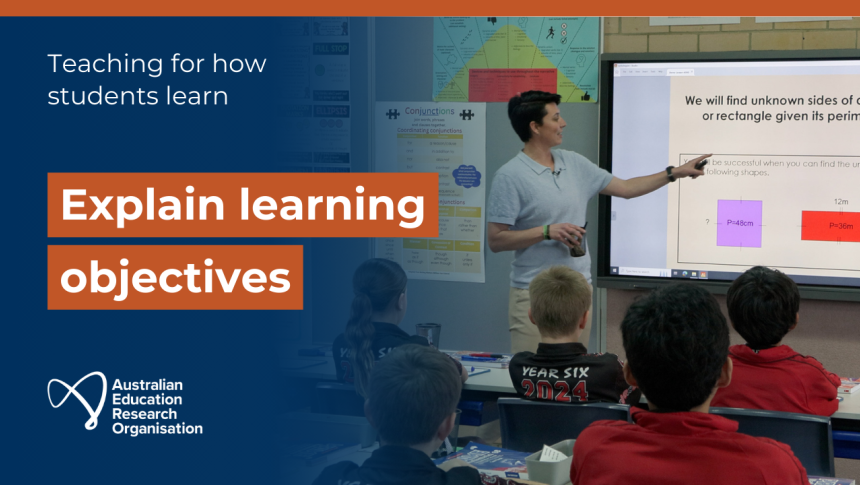
Explain learning objectives: Primary and secondary

This video demonstrates how teachers explain learning objectives in a range of primary and secondary classrooms.
Read more about Explain learning objectives: Primary and secondary
Video
Mar 2025

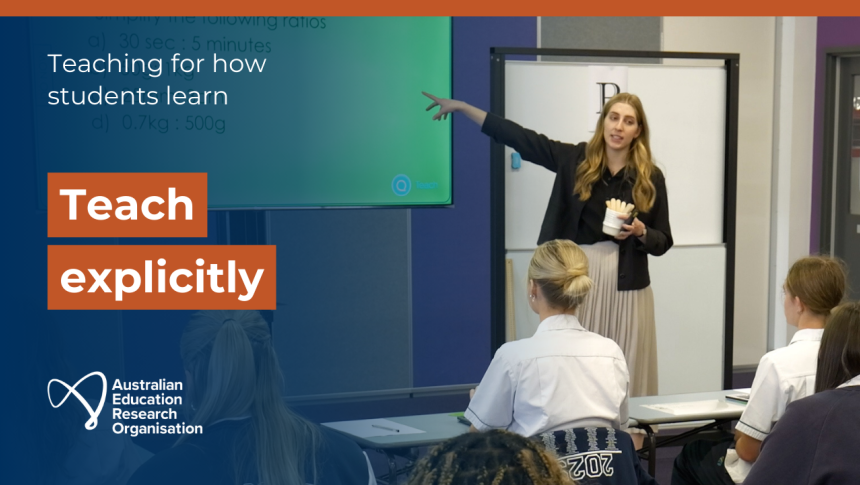
Teach explicitly: Primary and secondary

This video demonstrates how teachers teach explicitly in a range of primary and secondary classrooms. 
Read more about Teach explicitly: Primary and secondary
View all Guides & resources (48)

Research (4)

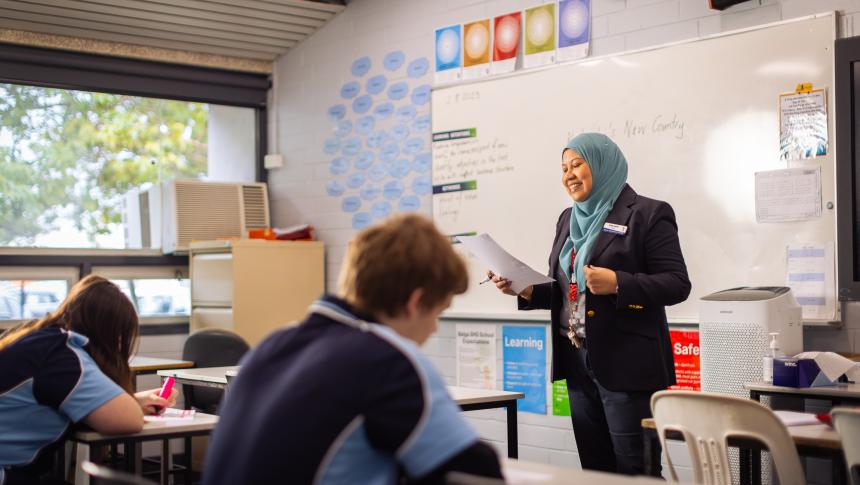
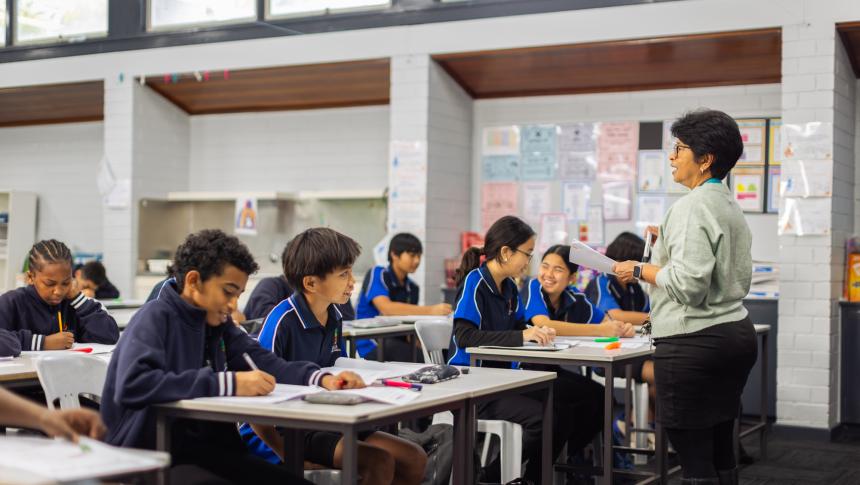
Teacher standing at the front of the classroom reading from a page
Research report
Mar 2024

A knowledge-rich approach to curriculum design: Commissioned report

This commissioned report provides an overview of the evidence underpinning a knowledge-rich curriculum and outlines the key design features and enablers to effectively enact a knowledge-rich curriculum in schools.
Read more about A knowledge-rich approach to curriculum design: Commissioned report
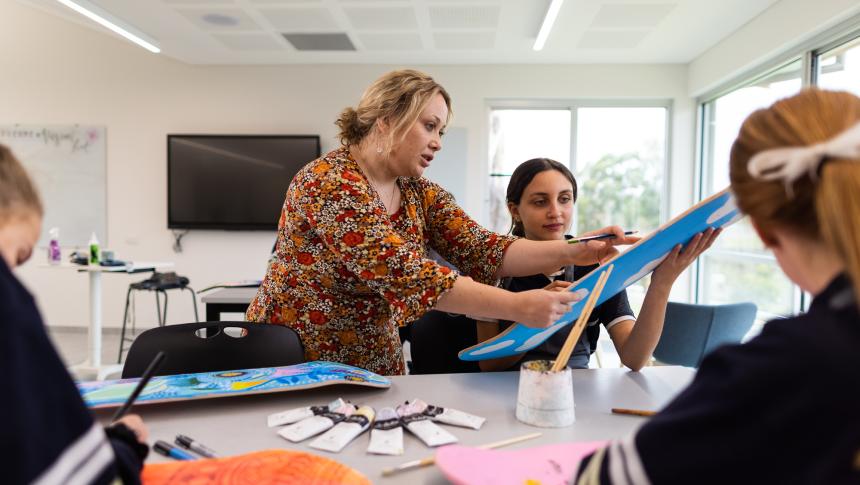
Teacher helping students with artwork
Research report
Sep 2023

How students learn best: An overview of the evidence

This paper highlights the impact aligning teaching practices with how students learn has on educational outcomes. It underscores the importance of evidence-based practices that enhance learning for all students.
Read more about How students learn best: An overview of the evidence
Teacher standing at the front of the class
Project
Sep 2023

How students learn

Our work on how students learn best (also known as the science of learning) connects cognitive science, neuroscience and education psychology research on the learning process with practical teaching implications. 
Read more about How students learn
View all Research (4)

Summaries & explainers (9)

Explainer
Apr 2025

Retention and recall

Retention and recall are fundamental to successful learning outcomes. Knowledge needs to be retained so that it can be used. Retention is the ability to store information in memory over time, while recall is the ability to retrieve and use stored information when needed. When students effectively retain and recall information, they can easily access and apply it to build on existing knowledge and develop deeper understanding.
Read more about Retention and recall
Explainer
Apr 2025

Attention and focus

Attention and focus are essential for students to process and retain new information effectively. Attention refers to the selective focus of conscious thought on specific information, allowing students to engage meaningfully with learning tasks. Engagement encompasses how students behave, feel and think as they actively participate in learning activities.
Read more about Attention and focus
Explainer
Apr 2025

Mastery and application

Mastery of learning is the accumulation and retention of knowledge, conceptual understanding and skills, and knowing when and how to use them. Application of learning includes transferring information to both familiar and new contexts, which leads to deeper understanding and more sophisticated use of knowledge. Mastery is fundamental to students’ achievement in school and their lives beyond formal education.
Read more about Mastery and application
View all Summaries & explainers (9)

Other (2)

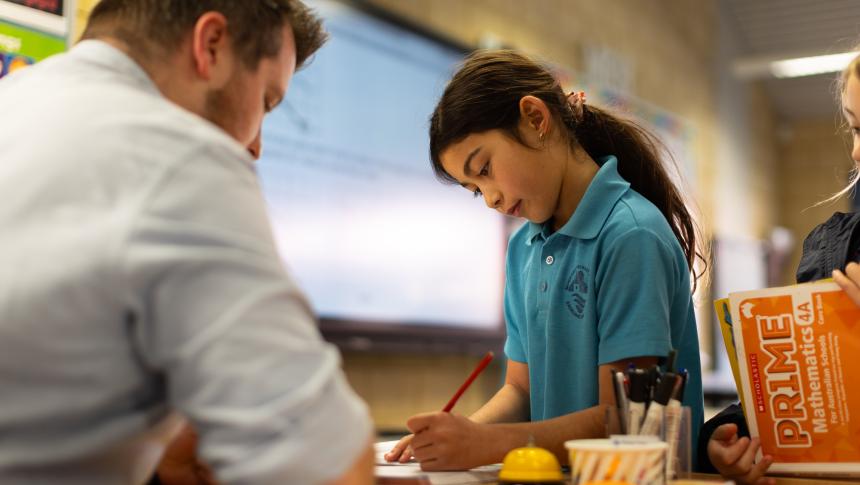
Primary school student standing in front of desk writing with pencil. Teacher sitting at desk helping student with writing.
Article
Oct 2024

Six things about how students learn

Knowing how students learn helps you apply teaching practices well, by understanding why some practices are more effective than others. This article focuses on techniques and strategies that improve outcomes for students.
Read more about Six things about how students learn
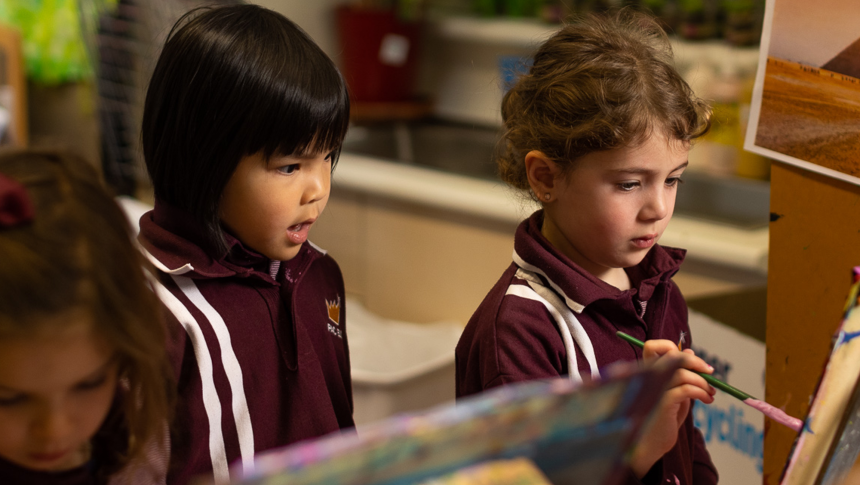
Young pupil watching another pupil paint on an easel
Article
Mar 2022

The science behind fostering children’s early learning and development

AERO’s ‘science of learning and development’ project will support teachers and educators to incorporate knowledge about how brains and bodies develop into their practice, beginning with early childhood education and care (ECEC) services.
Read more about The science behind fostering children’s early learning and development
Evidence matters Subscribe to our newsletter for practical, evidence-based education research, resources and news from AERO.
Subscribe to our newsletter

The Australian Education Research Organisation (AERO) acknowledges the Traditional Owners and Custodians of the lands, waterways, skies, islands and sea Country across Australia. We pay our deepest respects to First Nations cultures and Elders past and present. We endeavour to continually value and learn from First Nations knowledges and educational practices.

Artwork: Shaun Edwards | www.wildbarra.com.au
  • About AERO
    • About us
    • Our team
    • Our advisory groups
    • First Nations at AERO
    • Agency publications
    • Submissions
    • News
    • Media releases
  • Get involved
    • Work with us
    • Contact us
    • Support us
  • Policies & compliance
    • Privacy policy
    • Copyright
    • Website accessibility
    • Whistleblower policy
    • Environmental, social and governance work
  • About us
  • Our team
  • Our advisory groups
  • First Nations at AERO
  • Agency publications
  • Submissions
  • News
  • Media releases
  • Work with us
  • Contact us
  • Support us
  • Privacy policy
  • Copyright
  • Website accessibility
  • Whistleblower policy
  • Environmental, social and governance work
AERO’s work is made possible by the joint funding it receives from the Commonwealth, state and territory governments. Creative Commons BY 4.0, unless otherwise indicated. ABN 83 644 853 369
Australia's national
education evidence body

Main navigation

  • Research and resources
    • Resource collections
      • Resource collections
    • Guides & resources
      • Practice guides
      • Practice resources
      • Videos
      • Courses
      • Ochre resources
    • Summaries & explainers
      • Research summaries
      • Explainers
    • Research
      • Research reports
      • Analytical Insights papers
      • Discussion papers
      • Technical reports
      • Projects
  • Topics
    • Practice approaches
      • Assessment & measurement
      • Classroom management
      • Evidence-based practices
      • Explicit instruction
      • Formative assessment
      • Mastery learning
      • Practice implementation
      • Spacing & retrieval
      • Tiered interventions
    • Child & student cohorts
      • Culturally and linguistically diverse (CALD)
      • Disability & inclusion
      • Diversity
      • Equity
      • First Nations
    • Engagement strategies
      • Family engagement
      • Student engagement
      • Transitions
    • Learning & learning outcomes
      • Cognitive science
      • Executive functions
      • Language & communication
      • Literacy
      • Numeracy
      • STEM
      • Technology
      • Wellbeing & belonging
    • System-wide considerations
      • Evidence - use & generation
      • Initial teacher education
      • Leadership, administration & governance
      • NAPLAN
      • Policy
      • Professional learning
      • Workforce
  • Education settings
    • Education settings
      • Early childhood education and care (ECEC)
      • Primary school
      • Secondary school
      • Senior secondary school
      • Outside school hours care (OSHC)
  • About us
    • About AERO
      • About us
      • Our team
      • Our advisory groups
      • First Nations at AERO
      • Agency publications
      • Submissions
      • News
      • Media releases
    • Get involved
      • Work with us
      • Contact us
      • Support us
    • Policies & compliance
      • Copyright
      • Privacy policy
      • Website accessibility
      • Whistleblower policy
      • Environmental, social and governance work
  • Browse collection
  • Contact us